My Polish family warned me: Things can always get worse.
I used to roll my eyes at slavic pessimism. Now, I see it as preparation for an authoritarian America.

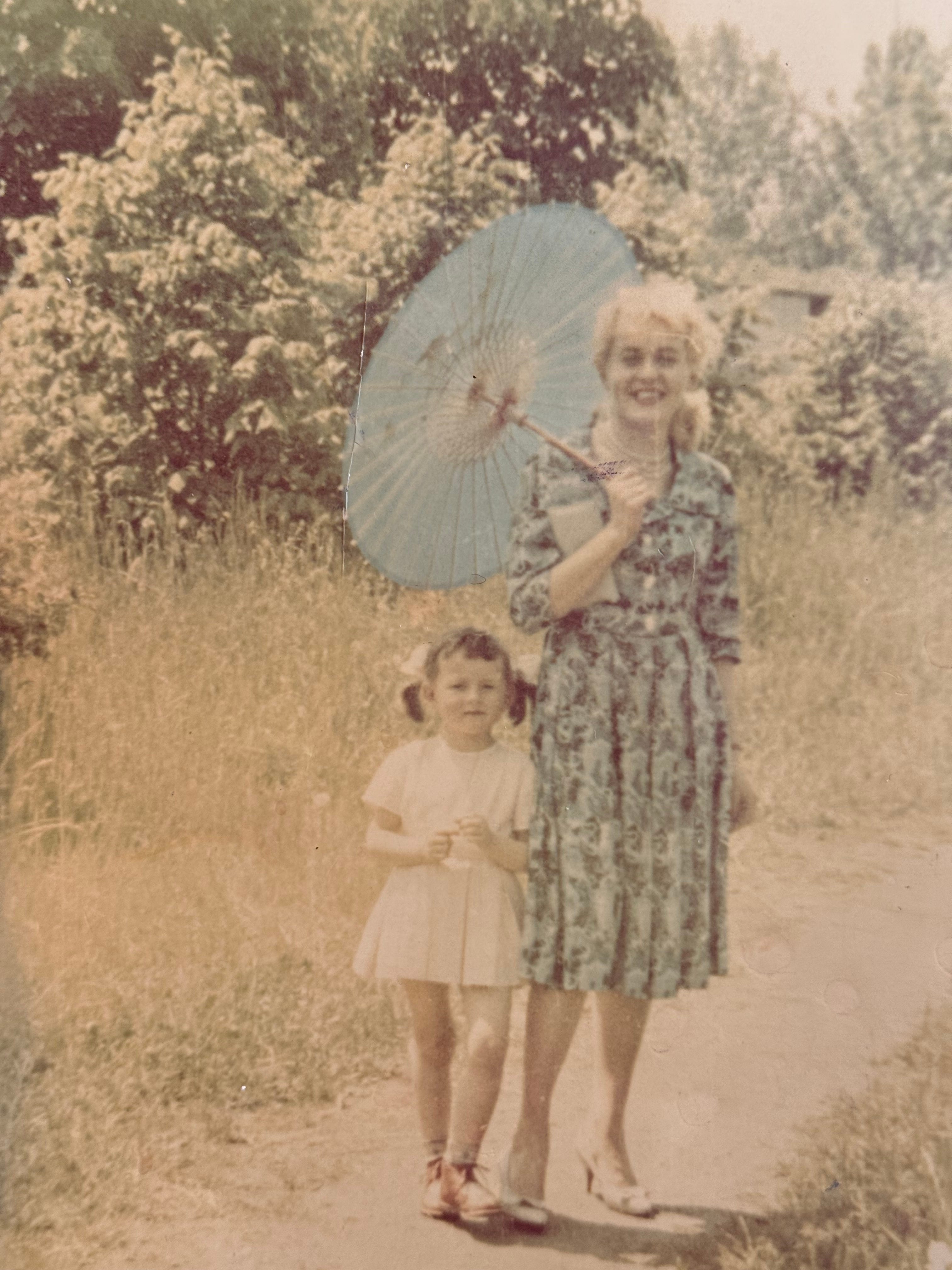
“Wars will always happen.” My Grandma (My Baba Jaga) always said to me. “Wars makes someone rich.”
When I first read one of those studies about generational trauma and how it affects your DNA, little bells went off all around my body, like, actual vibrations. That’s what I felt when she said that. I began to shake. I felt the generations of people controlled by bombs and fire flutter around in me, unleashed and warning me.
My grandma was five years old when the Nazi’s invaded Poland, and her first vision of the world ended. Her father lost his head to a cannonball on the first day of war in the battle for Wola. During the war she ran through fields of cabbage as war planes used her as target practice. She would occasionally remind me of this tip as if it would come in handy, in case I was ever being shot at, to zig and zag never run in a straight line.
For thirty years I rolled my eyes at her; there she goes again with the war. She is using coffee grounds twice to get more value out of them. Making coffee filters out of paper towels or cloth, saving every plastic bag and bottle and rubber band andlittle jars of bacon grease or schmaltz in the back of the fridge. Her fear of the next war never left her body and I always felt so bad for her. That she didn’t know what it was like to feel safe.
I can’t blame her. By the time I was born in 1985 in New York City she had spent the last forty-five years under occupation. But when I talk to her about those days there is no mention of the occupation or of the shortages. Instead her eyes filled with tears and she looks out the same window in Warszawa where she spent the entire occupation.
“Life is so beautiful Patrycja” she reminds me using my full Polish name. “The hardest times were the happiest times. They can never take your love from you.”
She passed away last month and her lessons and laughter have been with me since.
At a recent birthday party for one of my son’ friends, the desperation about the end of democracy oozed out of the grown ups in the form of sarcastic one liners and thin smiles. I imagine my Baba Jaga popping up and saying, Peace is an anamoly. Enjoy a moment of peace with the children playing in the sunlight and the oak trees.Every few minutes our conversation was interrupted by a sweaty kid digging in the cooler for a capri-sun before they ran back to the trees where the birthday boy’s dad corralled them all into a straight line to hit the Piñata.
The kids each looked back to see if we were watching before the blindfold was put on. We each met their gaze and took turns waving as if there was nothing to worry about, reassured them that we were there watching them. Watching out for them. Then we watch them swing in the wrong direction.
I felt the sudden but familiar bump of my younger son’s head as he leaned into me; a physical declaration of boredom. At five years old his face hit my hip, then I felt him slide behind my butt and peak out from behind me because he no longer wanted to participate in the grown up conversation and no longer wanted to play with the big-kids. His goodie bag was full of candy, it was time to go.
As we talked politics, we worried about them.
I cradled his head with my hands, and looked at the other parents. There were flecks of suffering, disappointment on their faces.
I imagined my grandma at her fifth birthday party in 1939.
I join hands in my mind with her mother, celebrating another year to live as I help my son find a lost candy in the ground. “Let me help you open this one, yes I know it’s your favorite” joining a chorus of worried mothers celebrating another year of life, every day until the end of the world. Afraid, protective and hopeful.
Behind us the San Francisco bay is glittering, the spot where the city meets the sea blurry behind a white haze.
It’s a most beautiful thing.
Perhaps it’s more rare than we thought. Perhaps more fleeting than we know.